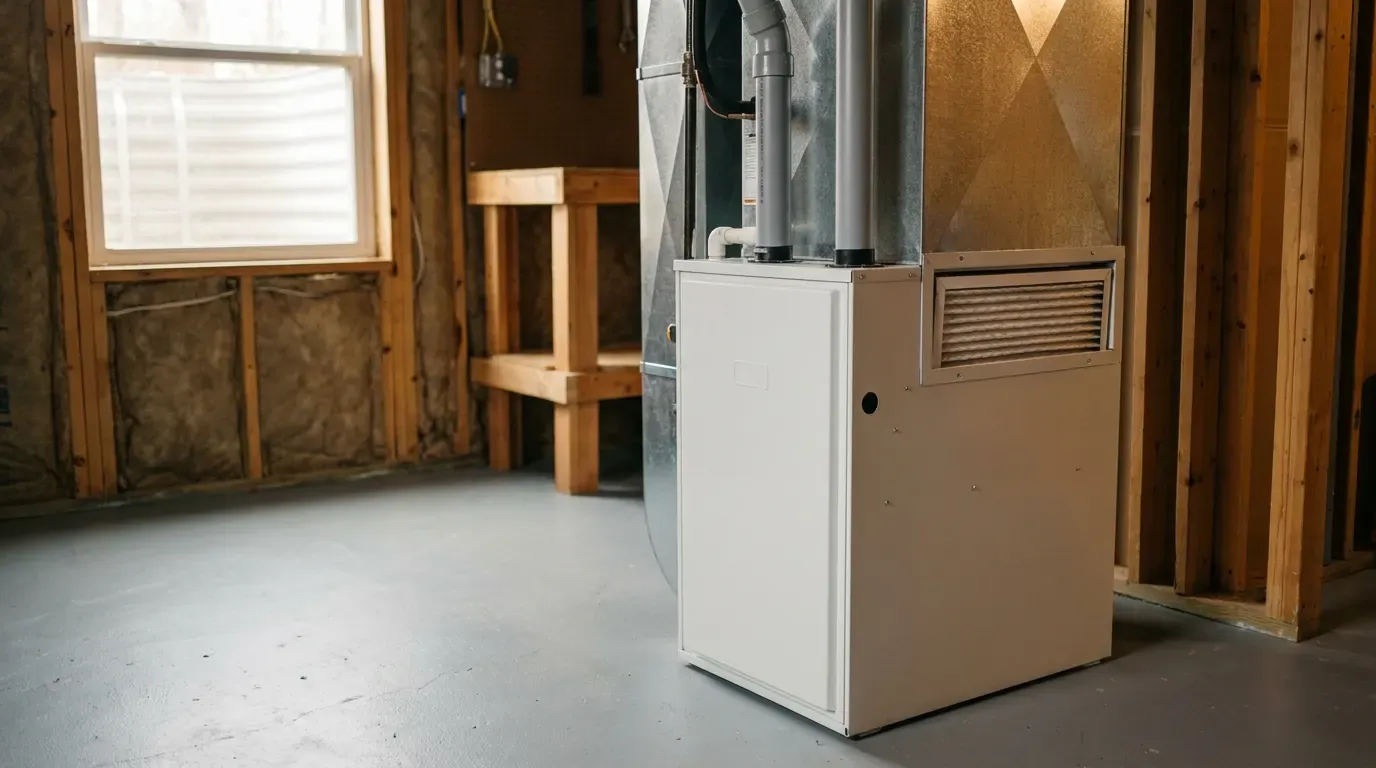
Symptoms we get called for
These eight furnace problems cover most of our winter calls. Where it's safe, we've included what you can check first.
No heat at all
No heat often comes down to power, settings or a safety lockout. Check that the thermostat is on Heat and set above room temperature, the breaker is on, and the switch near the furnace (it looks like a light switch) is on. A loose door panel can also stop it.
Furnace blowing cold air
First, check that the thermostat fan is set to Auto, not On. If the air stays cold, the burners probably aren't lighting or are shutting down early. That points to the ignitor, the flame sensor, a clogged filter tripping the high limit, or a blocked condensate drain on a high-efficiency furnace.
Furnace short cycling
A furnace that runs a minute or two and shuts off is often overheating and tripping its high-limit switch, usually from a clogged filter or closed vents. A dirty flame sensor or oversized furnace can also do it. Change the filter and open the vents first.
Clicks but won't light
Clicking with no flame usually means the ignition sequence is failing: a cracked hot surface ignitor, an inducer or pressure switch problem, or a gas valve issue. Most furnaces lock out after a few tries. Write down the blinking light pattern you see through the furnace's small window.
Lights, then shuts off
If the burners light and go out within a few seconds, the flame sensor usually can't prove there's a flame. A dirty flame sensor is the most common cause, followed by a poor ground or low gas pressure.
Blower runs constantly
If the fan won't stop, check that the thermostat fan is on Auto. If it is, the furnace may be overheating and running the blower to cool down, which points to a dirty filter or blocked airflow. A stuck control board relay can also do it.
Loud banging or squealing
A bang when the burners light is often delayed ignition, where gas builds up before it catches, and deserves a prompt call. Squealing or grinding usually means worn blower or inducer motor bearings. Turn the furnace off if the noise is getting worse.
Gas smell or carbon monoxide alarm
Safety comes first. If you smell gas, leave the house, don't flip switches or use your phone inside, and call your gas company's emergency line or 911 once you're outside. If your CO alarm goes off, get everyone into fresh air and call 911. Once the house is cleared, call us and we'll find the cause.
What the $39 diagnostic special covers
The diagnostic ($39 with our online special, regularly $79) checks your whole heating system, usually in 30 to 45 minutes:
- Ignition sequence, watched from the call for heat through blower start
- Flame sensor signal
- Gas pressure at the valve
- Heat exchanger, a visual check wherever it can be seen
- Inducer motor, pressure switch and limit switch
- Blower motor, capacitor and wheel
- Filter and airflow
- Thermostat settings and wiring
- Venting and carbon monoxide check
On electric furnaces, we test the heating elements, sequencers and wiring in place of the gas parts.
Test your heat before the first cold snap
The best time to find a furnace problem is before you need the heat. Central Kentucky's first cold nights usually show up in October or November, and furnace calls climb the week everyone turns the heat on.
Run your heat for 15 minutes on a cool evening in early fall. A furnace that won't light, or cold air from the vents, is worth a call while the weather's still mild.
How repair pricing works
Every furnace repair gets a firm, flat-rate price before any work starts. We quote the job, not the hour.
We diagnose, explain and quote, and you decide. If you approve, the $39 diagnostic is credited in full. If you don't, the $39 is all you owe. To get the $39 price, just mention our online special when you call or text; otherwise the diagnostic is our regular $79. The price is the same on a January night as on a Tuesday afternoon, with no travel surcharge in our service area.
Repair or replace?
Most furnace problems are worth repairing, and age is the best guide:
- Under about 15 years: usually repair.
- 15 to 20 years: weigh the repair cost against the furnace's age and condition. We'll give you our honest read.
- Over 20 years, a cracked heat exchanger, or a second major repair: ask for repair and replacement quotes side by side.
If we find a crack in the heat exchanger, we'll show you. That's a safety issue, not just a repair.
How a repair visit works
A furnace repair visit has four steps, and you know the price before any work begins.
- You call or text. Ahmad or Ammar answers and sets a time. Mention the $39 diagnostic special.
- We diagnose. The diagnostic checks the whole system.
- We quote. You hear what's wrong and the flat-rate price. Nothing starts until you say yes.
- We fix it and clean up. We run the furnace through a full cycle before we leave.
Why Lexington homeowners call HVAC Doctor
People call us because the owner who answers is the owner who shows up, and the quoted price is the price they pay. We hold Kentucky HVAC license HM07217, we're licensed and insured, we've kept Lexington homes comfortable since 2016, and we have a 5.0 rating on Google.
What customers say
Customers say we listen, explain the problem and work quickly.
“I can't say enough good things about HVAC Dr. From start to finish, they were professional, honest, knowledgeable, and easy to work with. They took the time to listen to my concerns, explain what was going on, and make sure everything was…”
“Amazing experience they came in and fixed my system in no time. I'm really happy that I called this company. They explain the problem and the cost before hand. They had the parts with them to fix it overall amazing experience.”
“Quality of work, speed of response, good treatment”
Furnace Repair questions
How much does furnace repair cost in Lexington?
It depends on what failed, so we don't quote repairs sight unseen. With our online special, the diagnostic is $39 (regularly $79; just mention it when you call or text). Then you get a firm, flat-rate price before any work starts. If you approve the repair, the $39 is credited in full. Nights, weekends and holidays cost the same as weekdays.
Why does my furnace smell like burning when I first turn it on?
Usually that's dust burning off the burners and heat exchanger after months of sitting. It should fade within the first hour or so of running. If it smells electrical, like hot plastic, or it doesn't fade, turn the furnace off at the thermostat and call us.
Do you repair electric furnaces?
Yes. We repair both gas and electric furnaces. Electric furnaces don't have burners or a gas valve, so the usual trouble spots are the heating elements, sequencers or relays, and the blower. The $39 diagnostic special (regularly $79) and flat-rate pricing work the same way on either type.
How often should I change my furnace filter?
Check a standard 1-inch filter monthly and change it every one to three months, more often with pets or during a remodel. Thicker 4- or 5-inch media filters usually last six to twelve months. A clogged filter is a common reason furnaces overheat and shut down.
Is a banging furnace dangerous?
A loud bang right when the burners light is often delayed ignition, where gas builds up before it catches. It isn't something to ignore. Turn the furnace off and call us. Popping or ticking as the ductwork warms up is usually harmless metal expanding, but we're happy to check.
Where should carbon monoxide alarms go?
Put a CO alarm on every level of the home and outside each sleeping area, following the alarm maker's instructions. Test them monthly and replace them by the end-of-life date printed on the unit. With a gas furnace or attached garage, they matter even more.
Can you fix my furnace today?
Most Lexington calls are same-day. When you call or text, one of the owners answers and gives you a realistic arrival time. We carry common furnace parts on the truck, and if a part has to be ordered, we'll tell you up front.
Do you charge more on nights, weekends or holidays?
No. We're open 24/7 and there are no overtime fees. A furnace that quits at 3 a.m. on a holiday gets the same $39 diagnostic special, the same credit toward the repair and the same flat-rate pricing as a weekday afternoon call.
Where we work
Lexington and nine nearby towns, with no travel surcharge and the same flat-rate pricing everywhere.