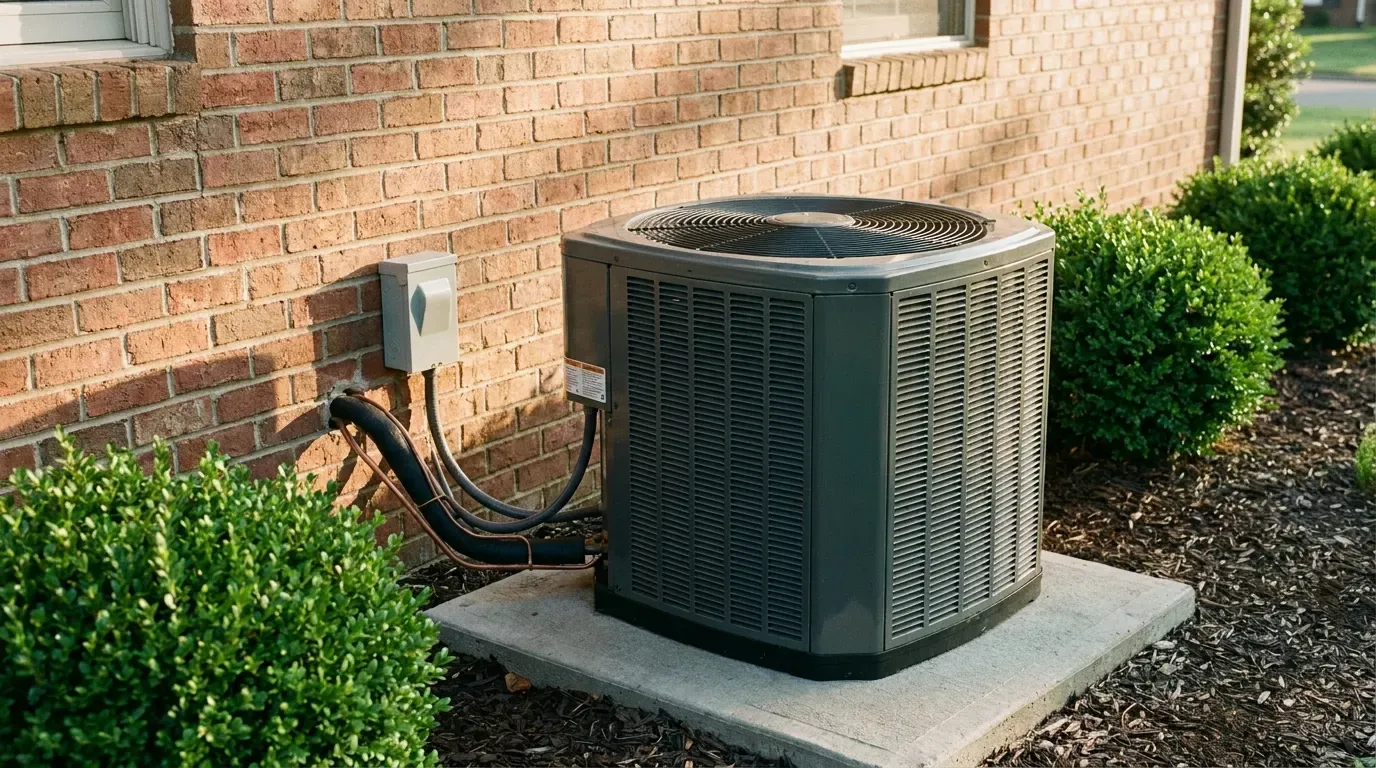
Start with an accurate diagnosis
The first question isn't repair or replace. It's what's actually wrong. A capacitor, contactor or fan motor is a very different decision from a failed compressor or a leaking coil. Make sure whoever gives you a recommendation tells you exactly what failed, why it failed and what else they noticed about the system.
Signs repair makes sense
- The system has been reliable, and this is the first significant problem.
- The failed part is a common, isolated component, like a capacitor, contactor, motor or control board.
- The repair costs a small fraction of what a new system would.
- The house stays comfortable when the system is working.
- The equipment is still under the manufacturer's parts warranty. On many brands that's 10 years if the equipment was registered.
Signs replacement deserves a look
- A major component failed, such as the compressor or a leaking indoor or outdoor coil, and the system is older.
- It has needed several repairs in the last couple of years.
- Some rooms are never comfortable, or the house stays humid in summer.
- Energy bills have climbed without a change in how you use the system.
- An older R-410A system needs a large refrigerant repair, or an R-22 system needs any refrigerant at all.
How long systems last
Central air conditioners commonly last around 15 years, and heat pumps somewhat less because they run in both seasons. Installation quality, maintenance and how hard the system works all make a big difference, so treat those numbers as a range, not a deadline.
A quick rule of thumb
Some contractors use the 5,000 rule: multiply the age of the system in years by the repair cost in dollars. If the result is more than 5,000, replacement is worth a serious look. It's a starting point, not a verdict. It doesn't account for how well the system has been maintained, how long you plan to stay in the house, or whether the rest of the system is in good shape.
Your plans matter too. If you're selling in a year or two, a reasonable repair usually makes more sense. If you plan to stay for years and the system is near the end of its life, replacing it on your own schedule beats replacing it in an emergency during a heat wave.
The refrigerant change
New systems now use R-454B or R-32 instead of R-410A. Existing R-410A systems can still be repaired and serviced, and the refrigerant is still available, but it's expected to get more expensive as production is phased down. That matters most for repairs that involve adding refrigerant to an older system. Our R-454B refrigerant guide explains the details.
Systems that use R-22 are in a tougher spot. R-22 production and import ended in 2020, so only recovered and reclaimed supply is left, and any repair that needs refrigerant is expensive. On an R-22 system, replacement is often the better investment.
What a good replacement quote includes
If replacement is on the table, compare quotes on more than price. A good quote includes:
- A Manual J load calculation to size the system, not just the size of the old one
- Matched indoor and outdoor equipment, rated to work together
- The make, model and efficiency rating (SEER2) of each piece
- What's included: line set, pad, electrical, thermostat, any required permit and removal of the old equipment
- The parts and labor warranties, in writing
- A firm total price
How HVAC Doctor handles it
We diagnose the problem first and give you a firm repair price. If replacement is worth considering, we'll give you both prices side by side and explain the tradeoffs honestly. We won't push a new system when a repair makes sense. Mention our online special and the diagnostic is $39 (regularly $79), credited to the repair if you go ahead.
See AC and heat pump installation for how we size and install new systems, or AC repair for the repairs we handle most.
Common questions
How old is too old for an AC system?
Age alone doesn't decide it. Many central air conditioners last around 15 years and heat pumps a bit less, but condition, repair history, comfort and the type of repair matter more. A well-maintained older system with a minor problem is often worth repairing.
Is it worth repairing an AC compressor?
Sometimes. On a newer system that's still under parts warranty, replacing the compressor can make sense. On an older system, labor and refrigerant costs often make replacement the better value. Ask for both prices.
What is the 5,000 rule?
Multiply the system's age in years by the repair cost in dollars. If the result is more than 5,000, replacement deserves a serious look. It's a rule of thumb, not a verdict.
Should I replace my AC and furnace at the same time?
Not always. If the furnace is in good shape, you can replace just the AC, but the indoor coil has to match the new outdoor unit, and with the switch to new refrigerants the coil almost always has to be replaced too. If both are aging, replacing them together can save on labor and keeps the equipment matched.
Does HVAC Doctor install replacement AC systems?
Yes. We install air conditioners and heat pumps in Lexington and nine nearby cities, sized with a Manual J load calculation and quoted at a firm price before work starts.