First: protect the house and the furnace
If water is near the furnace's wiring or spreading across the floor, turn the system off at the thermostat. Soak up the standing water with towels to protect the floor and keep mold from starting. Don't open the furnace cabinet or reach into it.
Is your furnace a high-efficiency model?
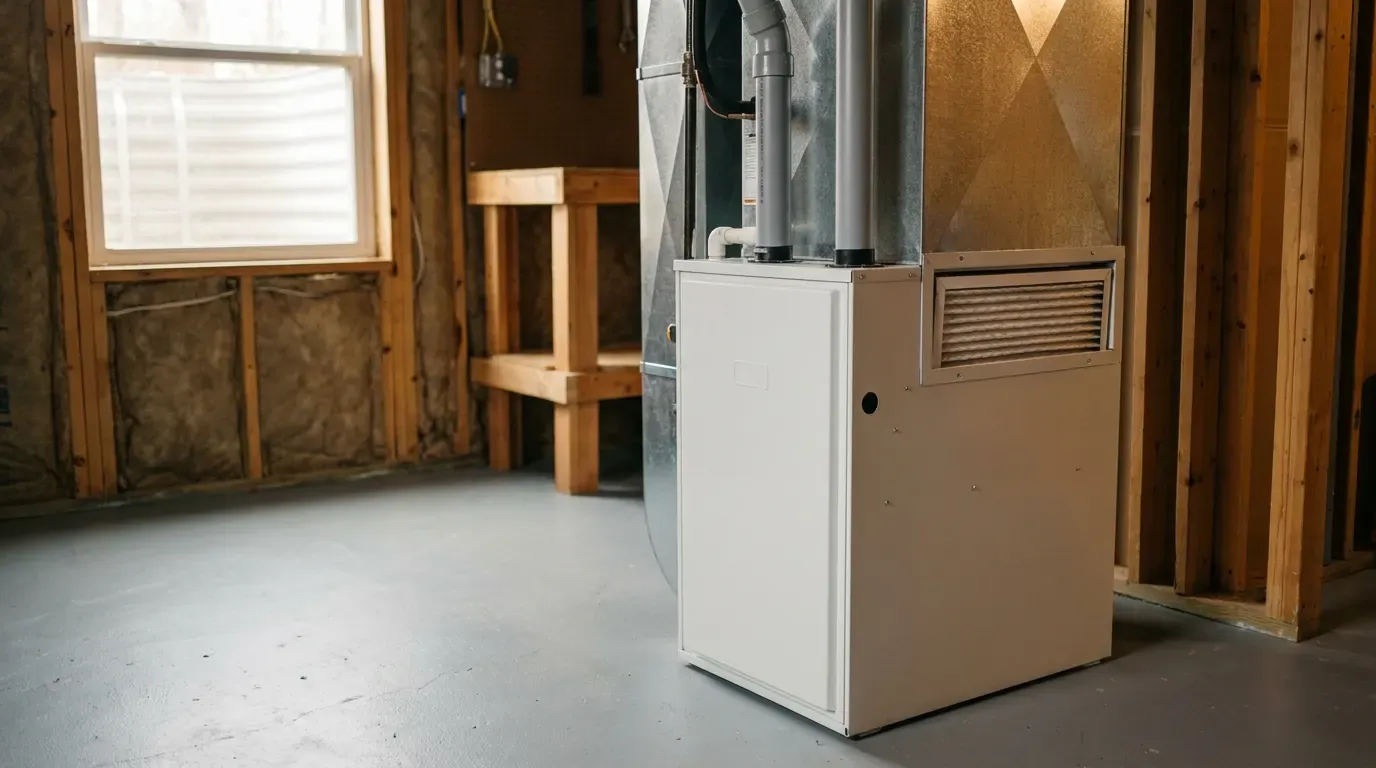
Look at the vent pipes. If the furnace vents through white plastic (PVC) pipes, it's a high-efficiency condensing furnace, usually rated 90% efficient or higher. It pulls so much heat out of the exhaust that water condenses inside it, and that water drains away through a small hose or pipe, a trap and sometimes a pump. A working condensing furnace makes water every time it runs. It just shouldn't end up on the floor.
If the furnace vents through a metal flue pipe, it's a standard-efficiency furnace. It isn't designed to make water, so a leak points somewhere else: the air conditioner coil, a humidifier, nearby plumbing or a venting problem.
The most common causes
- A clogged condensate drain or trap. Dirt, sludge and algae build up and the water backs up. This is the most common cause on high-efficiency furnaces.
- A failed condensate pump. Many basement and closet furnaces pump the water to a drain. If the pump is unplugged, broken or its outlet hose is blocked, the reservoir overflows.
- A frozen drain line. On the coldest nights, a drain line that runs outside or through a cold crawlspace can freeze and back the water up.
- A loose or cracked drain connection. Common after a furnace has been worked on or bumped.
- The AC coil above the furnace. In summer, water around the furnace usually comes from the air conditioner's coil, which sits on top of it. A clogged AC drain or a frozen coil from a dirty filter are the usual causes.
- A whole-house humidifier. A cracked housing, loose fitting or blocked drain can drip down onto or beside the furnace.
- Something that isn't the furnace. A water heater, floor drain or nearby plumbing can look like a furnace leak.
Safe checks you can do
- Replace the filter if it's dirty. It won't clear a clogged drain, but a clogged filter can freeze the AC coil in summer.
- Follow the drain line you can see from the furnace to where it ends. Look for kinks, disconnections or ice. Never use an open flame to thaw a frozen line.
- If there's a condensate pump (a small box with a hose, usually next to the furnace), make sure it's plugged in and the hose isn't kinked.
- If water seems to come from a humidifier, close the small water valve that feeds it, if you can do that safely.
- Check that the water isn't coming from the water heater or other plumbing nearby.
Why it shouldn't wait
On many high-efficiency furnaces, a backed-up drain trips a pressure switch or float switch that shuts the heat off, so a drain problem can turn into a no-heat call on a cold night. Water left sitting can also rust parts, damage floors and drywall and lead to mold. If the filter is clean and the drain looks clear but water keeps showing up, it's time for a technician.
How HVAC Doctor can help
Call or text (859) 684-3259. One of the owners, Ahmad or Ammar, answers 24/7, and nights, weekends and holidays cost the same as a weekday. Mention our online special and the diagnostic is $39 (regularly $79), credited to the repair if you go ahead, and you get a firm price before any work starts. Most Lexington calls are same-day. We'll find where the water is coming from, clear and test the drain, and check the pump and safety switches.
Common questions
Is it normal for a furnace to make water?
A high-efficiency (condensing) furnace makes water every time it runs and drains it away through a hose or pipe. That's normal. Water on the floor isn't. A standard furnace with a metal flue pipe shouldn't make water at all.
Can I keep running my furnace if it's leaking water?
If water is pooling near wiring or spreading, turn the furnace off at the thermostat and call. If it's a small drip you can catch in a pan away from any electrical parts, it may be fine for a short time, but have it checked soon, because a clogged drain often shuts the heat off on its own.
Why is there water under my furnace in the summer?
In summer the water usually comes from the air conditioner's indoor coil, which sits on top of the furnace. A clogged AC drain line or a coil that froze because of a dirty filter are the most common causes.
Can a furnace leak cause a no-heat problem?
Yes. On many high-efficiency furnaces, a clogged drain or trap trips a safety switch that stops the furnace from lighting. Clearing the drain often brings the heat back.
Do you charge extra for a leak call on a weekend?
No. We're open 24/7 with no overtime fees. Mention our online special and the diagnostic is $39 (regularly $79), credited to the repair if you go ahead.