What's normal in cold weather
Before you call, know that all of these are normal for a working heat pump:
- Warm, not hot, air. A heat pump often delivers air in the 90s°F, compared with 120°F or more from a gas furnace. It can feel cool on your hand even when the system is working.
- Long run times. Heat pumps run longer and more steadily than furnaces, and they run more as the temperature drops. Running most of the time on a day in the 20s is normal.
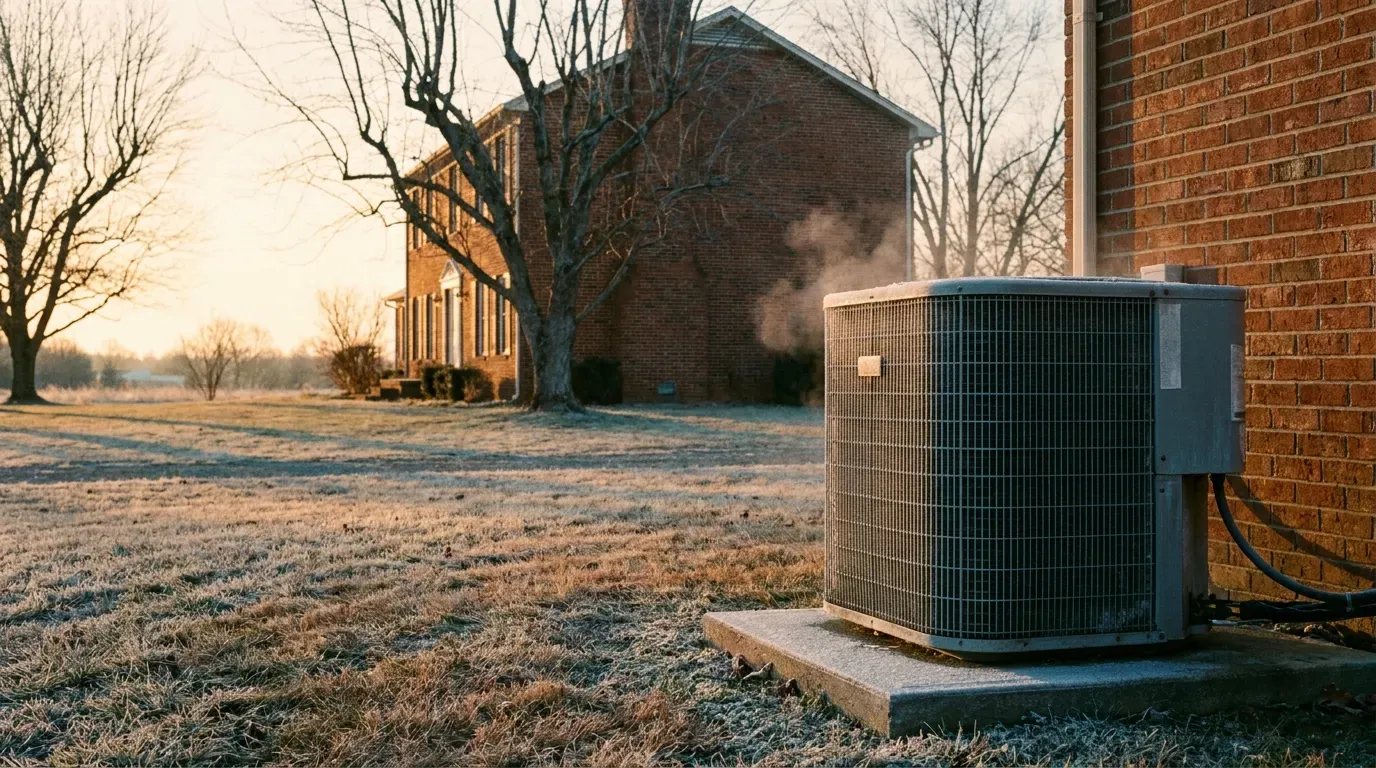
- Defrost cycles. In cold, damp weather, frost builds on the outdoor coil. Every so often the heat pump switches into defrost for a few minutes: the outdoor fan stops, you may hear a whoosh, and steam can rise from the unit. The air indoors may feel cooler until it switches back.
- Aux heat in cold weather. Most heat pumps have backup heat, either electric heat strips or a gas furnace in a dual-fuel system. It's normal for 'aux heat' to show on the thermostat during defrost, in very cold weather, or after you raise the temperature several degrees at once.
1. Check the thermostat settings
Make sure the thermostat is set to Heat and the set point is above the room temperature. The thermostat also has to be configured for a heat pump. A heat pump's reversing valve is controlled by the O/B wire, and if the thermostat is set up for the wrong one, the system cools when you ask for heat. This often shows up right after a new thermostat is installed. Our thermostat installation page explains more.
Avoid big setbacks. Turning the thermostat down 8 or 10 degrees overnight and back up in the morning often brings on the expensive backup heat. Small changes of a couple of degrees, or a smart thermostat that's set up for a heat pump, work better.
Emergency heat (EM heat) turns off the heat pump and runs only the backup heat. Use it only if the outdoor unit has failed, and call for service, because running on emergency heat costs much more.
2. Check airflow
A clogged filter hurts a heat pump in both seasons. In heating mode, low airflow makes the system run at higher pressures and deliver less heat. Replace the filter if it's dirty, using the size printed on the frame, and make sure supply vents and return grilles are open and clear.
3. Check the outdoor unit
Look at the outdoor unit while it's running. A light, even frost that clears during defrost is normal. These are not:
- The whole unit is covered in thick ice, including the top or the fan.
- Ice keeps building and never clears, even after an hour or two.
- The fan isn't spinning while the unit is running.
- Water is dripping onto the unit from a gutter or roof edge and freezing on it.
If the outdoor unit is iced over
Don't chip ice off the coil or pour hot water on it; the fins and tubes damage easily. Keep snow and leaves clear of the base and sides. Heavy ice usually means the defrost control, a sensor, the outdoor fan or the refrigerant charge needs attention. If the unit is iced solid, switch the thermostat to emergency heat so the compressor isn't running against the ice, and call.
Signs you need service
Call for a diagnosis if you notice any of these:
- The house can't hold its temperature in mild weather, in the 30s or 40s.
- Aux heat shows on the thermostat almost all the time, or your electric bill jumps suddenly.
- The system blows cool air for long periods, not just during defrost.
- Grinding, rattling or screeching from the outdoor unit.
- The outdoor unit is iced solid or the fan won't turn.
- A breaker trips again after one reset.
How HVAC Doctor can help
When you call or text (859) 684-3259, tell us the outdoor temperature, what the thermostat says, and whether 'aux' or 'emergency' shows on the screen. One of the owners, Ahmad or Ammar, will answer. Mention our online special and the diagnostic is $39 (regularly $79), credited to the repair if you go ahead, and there are no overtime fees at night or on weekends. More on heat pump repair and service.
Common questions
Why is my heat pump blowing cool air?
Heat pump air is warm rather than hot, often in the 90s, so it can feel cool on your hand. It also blows cooler air briefly during a defrost cycle. If the air stays cool for long periods and the house can't hold its temperature, have it checked.
Why is my heat pump covered in ice?
Light frost that melts off during defrost cycles is normal. Heavy ice that covers the unit or never clears usually means a defrost control, sensor, fan or refrigerant problem. Don't chip it off; call for service.
Why is my heat pump steaming?
That's usually a normal defrost cycle. The unit briefly warms the outdoor coil to melt frost, and the melting frost turns to steam in the cold air.
What's the difference between aux heat and emergency heat?
Aux heat is backup heat the system adds on its own when it needs help, such as during defrost or in very cold weather. Emergency heat is a setting you choose that turns the heat pump off and runs only the backup heat. Use it only if the outdoor unit has failed.
Does HVAC Doctor service heat pumps?
Yes. We repair and maintain heat pumps in Lexington and the nine nearby cities we serve. Mention our online special and the diagnostic is $39 (regularly $79), credited to the repair if you go ahead.