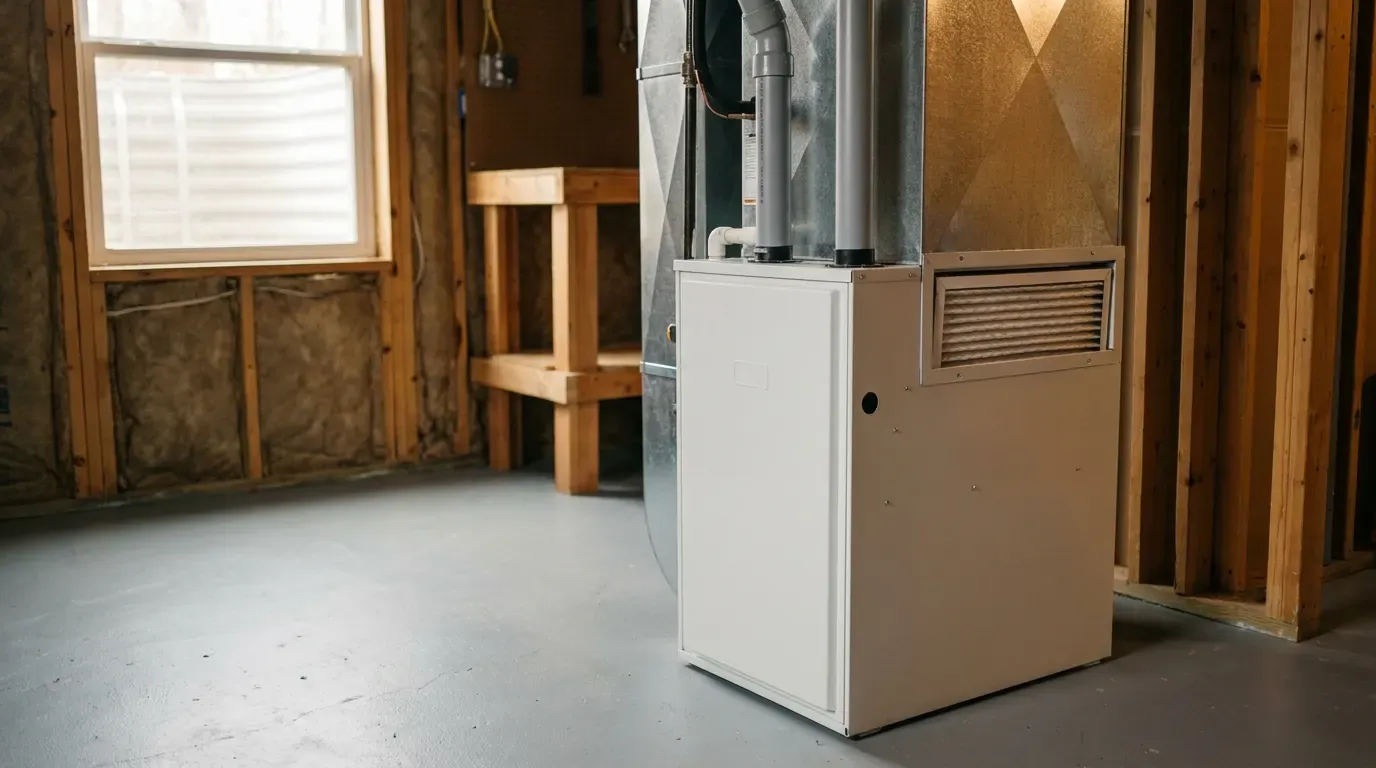
Start with the furnace's age
ENERGY STAR suggests considering a replacement when a furnace is more than 15 years old. That isn't an expiration date. Plenty of well-maintained furnaces run longer. It's the point where it makes sense to weigh a repair against a new furnace instead of repairing automatically.
You can usually find the furnace's age on the data plate inside the front panel, where the model and serial numbers are. Many manufacturers code the build year into the serial number. If you can't tell, we can.
Other signs it may be time
ENERGY STAR lists these signs that heating and cooling equipment may need replacing:
- It needs frequent repairs and your energy bills are going up.
- Some rooms are too hot or too cold.
- Your home has humidity problems or excessive dust.
- The system is noisy.
Safety red flags
A cracked heat exchanger is the big one. The heat exchanger keeps combustion gases, including carbon monoxide, separate from the air you breathe. If we find a crack, we'll show you what we found, and on most furnaces replacing the furnace is the safe fix. Read more in Carbon monoxide and your furnace.
Repeated rollout or overheating problems, rust or corrosion inside the burner area, and scorch marks around the burners are also worth a serious look.
How to compare a repair with a new furnace
Ask for both prices side by side, then think about:
- The repair price compared with the furnace's age. A modest repair on a 10-year-old furnace is usually an easy yes. A major repair on a 20-year-old furnace deserves a second thought.
- What's next. If other parts are worn too, one repair may be followed by another.
- Efficiency. A standard furnace is about 80% efficient. A high-efficiency condensing furnace is 90% or higher, so more of the gas you pay for becomes heat. Switching types can mean new venting and a condensate drain, which is part of the price.
- Comfort. If some rooms never get warm, a new furnace sized for your house, along with any duct fixes it needs, can solve more than the breakdown.
Consider a heat pump or dual fuel
If your air conditioner is old too, replacing both at once can make sense. A heat pump heats and cools, and a dual fuel system pairs a heat pump with a gas furnace that takes over on the coldest nights. Our heat pump service page explains how they handle Kentucky winters.
A note on tax credits
The federal tax credit for energy-efficient furnaces, heat pumps and other home improvements (often called 25C) ended for equipment placed in service after December 31, 2025, so don't count on it for an install in 2026. Ask your utility about any current rebates, and check with a tax professional about your situation.
What we'll tell you
When we diagnose a furnace, you get a firm price for the repair before any work starts. If the furnace is old or the problem is serious, we'll give you repair and replacement prices side by side and our honest read, and the decision is yours. New furnaces are sized with a Manual J load calculation, not guessed from square footage.
Already have a replacement quote from another company? Our second opinion on it is free. Mention our online special and a diagnostic visit is $39 (regularly $79), credited to the repair if you go ahead. Call or text (859) 684-3259 any hour.
Common questions
How long does a furnace last?
There's no fixed number. ENERGY STAR suggests considering a replacement once a furnace is more than 15 years old, and many well-maintained furnaces run longer. Frequent repairs, rising bills and uneven heating are signs it's wearing out.
Is a cracked heat exchanger dangerous?
It can be. The heat exchanger keeps combustion gases, including carbon monoxide, out of the air you breathe. A crack can let them through. If we find one, we'll show you, and on most furnaces replacement is the safe fix. Keep working CO alarms on every level of your home.
Will you push me to replace my furnace?
No. Most furnace problems are worth repairing, and we'll tell you when they are. If the furnace is old or the problem is serious, you'll get repair and replacement prices side by side and you decide.
Do you give free second opinions on replacement quotes?
Yes. If another company quoted you a new furnace, AC or heat pump, our second opinion on that quote is free.
Is there still a federal tax credit for a new furnace?
The federal 25C credit for energy-efficient home improvements, including furnaces and heat pumps, ended for equipment placed in service after December 31, 2025. Ask your utility about current rebates and a tax professional about your own situation.